
College of Health Professions
Program-defined Competencies
University of Findlay Physician Assistant Program-defined Competencies for Entry Level Practice.
College of health professions
Program-Defined Competencies
- Evaluate diverse clinical situations by applying knowledge of anatomy, physiology, pathophysiology, clinical medicine, patient presentation, differential diagnosis, patient management, surgical principles, and health promotion and disease prevention.
- Apply medical knowledge and clinical reasoning to interpret information gathered from the history, physical examination and diagnostic procedures to formulate, develop, and implement appropriate diagnostic and therapeutic management plans for a diverse patient-centered population across the age span.
- Demonstrate a foundation of medical knowledge by applying biomedical, clinical, and social sciences to patient care.
- Demonstrate interpersonal and communication skills that facilitate the effective exchange of information and collaboration with patients, families, and other health professionals.
- Provide patient education and counseling through the effective use of appropriate communication techniques while demonstrating awareness of cultural diversity.
- Accurately and adequately document and record information regarding the care process for medical, legal, quality, and financial purposes.
- Demonstrate the ability to deliver patient-centered education and counseling.
- Demonstrate cultural humility to promote respectful, equitable, patient-centered care.
- Provide care that is effective, patient-centered, timely, efficient and equitable for the treatment of health problems and the promotion of wellness as a member of the health care team.
- Demonstrate caring and respectful behaviors when interacting with patients and their families to establish a therapeutic patient-provider relationship.
- Provide services and education aimed at preventing health problems and maintaining health.
- Establish rapport with team members, maintain appropriate boundaries in work and learning situations, relate well to students, faculty, and health care professionals in a collaborative environment.
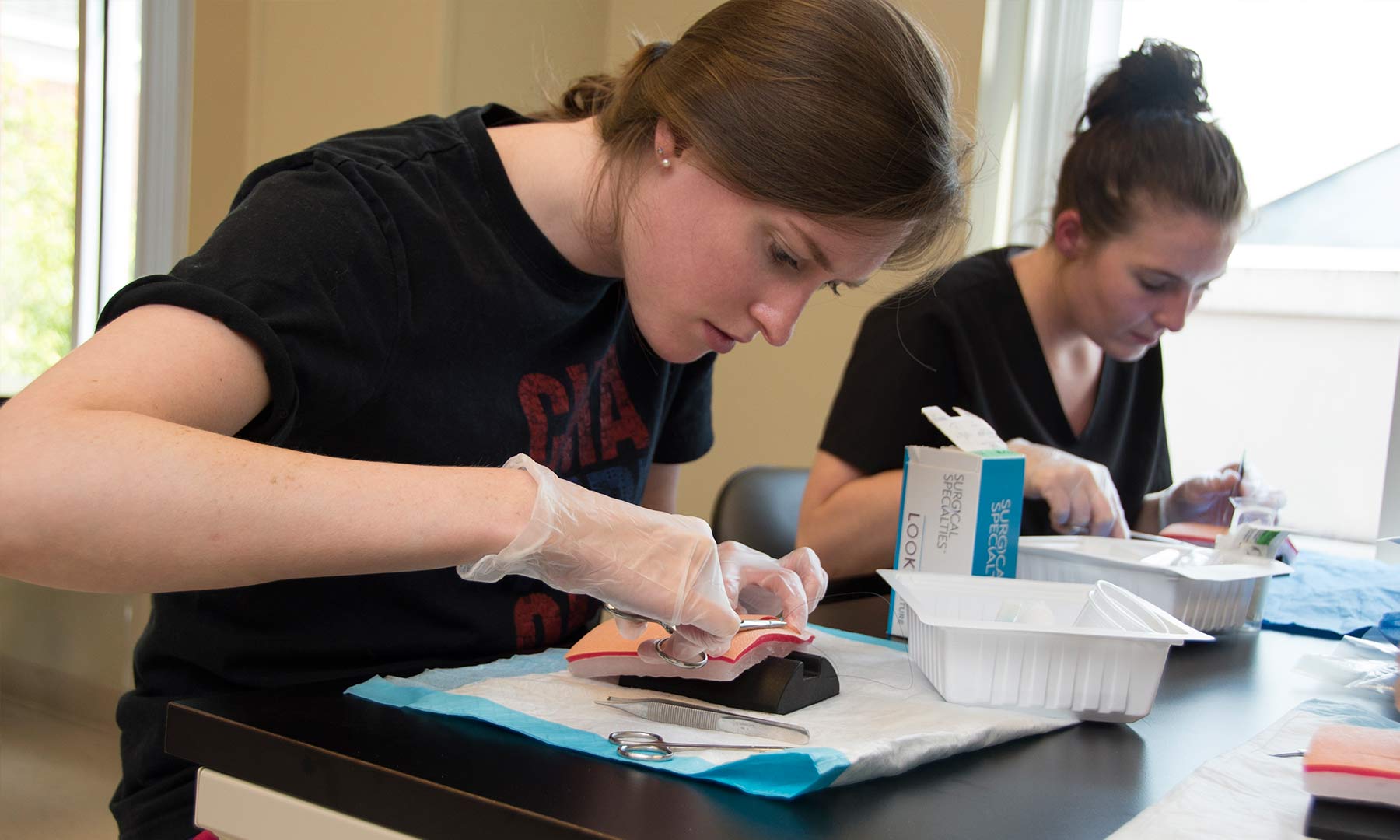
- Competently perform diagnostic and therapeutic procedures expected of the generalist physician assistant.
- Elicit a comprehensive, detailed and accurate medical history for patients across the lifespan.
- Perform comprehensive and problem-oriented physical examinations of patients across the lifespan.
- Interpret screening and diagnostic studies.Document appropriate history and physical examinations.
- Document appropriate history and physical examinations.
- Perform procedures common to physician assistant practice.
- Demonstrate professionalism by practicing in a competent, legal, and ethical manner as a physician assistant and as a member of the health care team, serving a population of patients of all ages in diverse environments.
- Demonstrate sensitivity and compassion toward patients in need, take time and effort to explain information to patients, listen empathetically to both the sick and the well patient acknowledging his/her concerns, show respect for patient’s confidentiality, and put the patient’s best interest first.
- Exhibit adherence to legal and regulatory requirements and ethical practices in relation to duty of care and inter-professional teamwork.
- Demonstrate an understanding of the signs, causes, and consequences of burnout in the health care setting and will apply strategies for personal wellness, resilience, and sustainable practice.
- Demonstrate professionalism, responsibility and ethical practice.
- Demonstrate the ability to effectively collaborate in an inter-professional team.
- Recognize legal and regulatory requirements of professional practice.
- Integrate systems-based practice principles to optimize safe, equitable, high-quality patient care.
- Assess and improve delivery of patient care through appropriate use of learning resources, self-reflection, and commitment to lifelong learning.
- Locate, appraise, and integrate evidence from scientific studies related to patient health problems.
- Critically evaluate one’s own performance to identify strengths and develop plans to resolve weaknesses.
- Apply information technology to manage information, access on-line medical information, and facilitate lifelong learning.
- Appropriately address gender, cultural, cognitive, emotional, and other biases; gaps in medical knowledge; and physical limitations in oneself and others.
- Formulate a differential diagnosis based on elicited history and physical examination findings.
- Analyze patient presentation and apply clinical reasoning to formulate evidence-based management plans.
- Critically appraise and integrate current medical literature to support evidence-based clinical-decision making.
- Demonstrate an awareness of and responsiveness to the larger system of health care to provide patient care that is of optimal value, and demonstrate an understanding of needs and priorities for cost-effective health care, resource allocation, and uncompromised quality of care.
- Effectively function within different types of medical practices and delivery systems.
- Demonstrate knowledge of different types of payment systems in health care.
- Collaborate with supervising physician and other health care providers to promote a safe environment for the delivery of quality patient care.
- Exercise cultural humility towards all patients regardless of disability status or special health care needs, ethnicity/race, gender identity, religion/spirituality, and/or sexual orientation.
- Demonstrate awareness of “self” in regards to biases and actions that may affect patient care.
Contact Us
Need more information about the Physician Assistant program at the University of Findlay? Have questions about admissions, prerequisites, curriculum, clinical rotations, certification preparation, or career opportunities? We’re here to help!
Email: jennifer.myers@findlay.edu
Phone: (419) 434-4529
Location: 1000 N. Main St. Findlay, OH 45840