
College of Business and Humanities
Forensic Chemistry
Apply chemistry to the investigation of physical evidence. Explore drugs, toxins, and trace materials while developing laboratory skills that support accurate scientific analysis in the criminal justice system.
Overview
About the Program
University of Findlay’s Forensic Chemistry program is designed for students who enjoy chemistry and intend to pursue a career that relies on chemistry knowledge. The University of Findlay’s Forensic Chemistry program prepares students to apply chemical science to the analysis of physical evidence in criminal investigations. Forensic chemists play a critical role in the justice system by identifying, testing, and interpreting substances such as drugs, toxins, trace materials, and explosives to support accurate, science-based conclusions.
Built on the rigorous FEPAC standards of the American Academy of Forensic Sciences, this program is designed for students interested in working with unknown substances, trace evidence, and chemical analysis. Students explore areas such as toxicology, seized drug analysis, arson investigation, firearms examination, and trace evidence while building a strong foundation in chemistry and forensic science principles.
With access to state-of-the-art laboratories, experienced faculty, and undergraduate research opportunities, students gain hands-on experience that prepares them for immediate entry into forensic laboratory careers or graduate study. Strong partnerships with related disciplines such as chemistry and pharmacy also allow students to customize their academic path through double majors or minors aligned with their goals.
Program
Highlights
Opportunities to Gain Professional Experience
Opportunities to Engage in Hands-On Learning Opportunities
Rigorous Curriculum Aligned with American Academy of Forensic Science FEPAC standards
Top 5 in All Evaluative Categories Relative to Comparative Universities
College of business and Humanities
At a Glance
Degree
Bachelor of Science
Format
On-Campus, Online, or Hybrid
Required credits
120+ Credits
Curriculum
Course Requirements
Students earning a Bachelor of Science degree in Forensic Chemistry must complete the following curriculum.
The curriculum consists of required courses grounded in forensic biology, forensic chemistry, forensic evidence, physics, mathematics, and statistics.
opportunities
Hands-On Experience
Students gain professional experience and develop leadership skills through the completion of internships. The Behavioral & Justice Sciences Program’s internship policy is flexible, allowing students to complete internships locally, at the state-level, nationally, internationally, and in the private sector, which can be paid experiences.
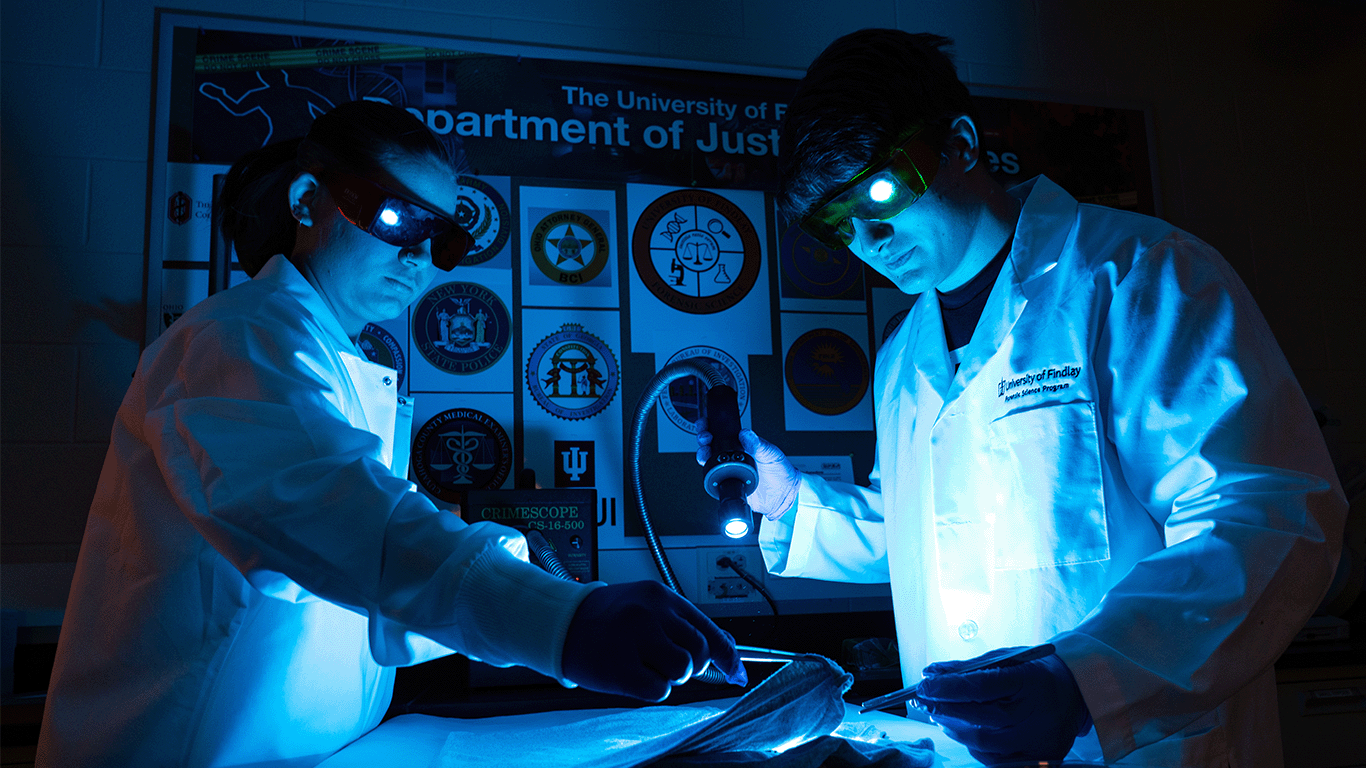
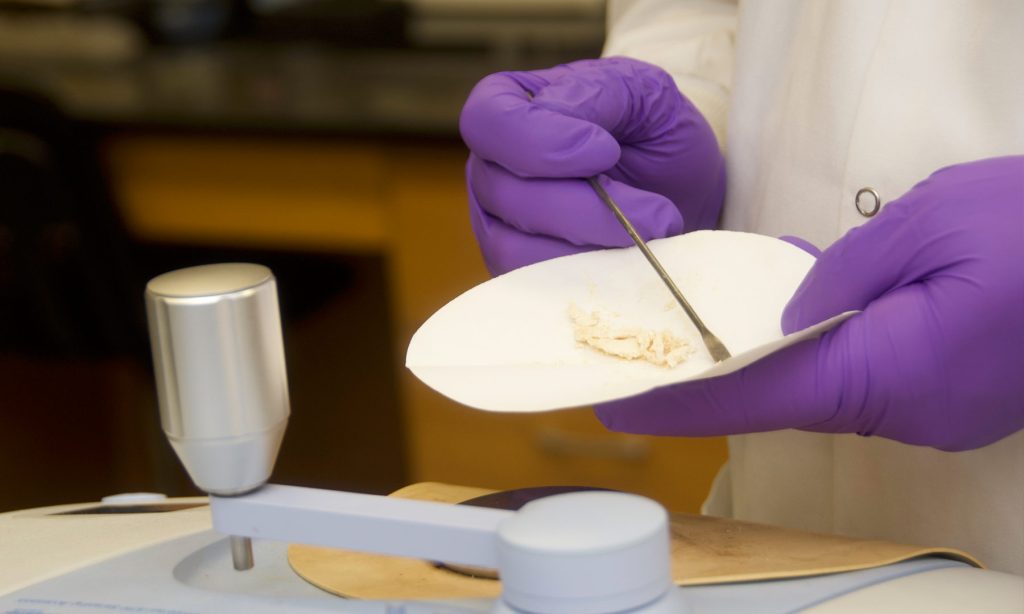
Students gain hands-on experience in processing crime scenes and analyzing forensic evidence in the Behavioral and Justice Sciences Department’s Crime Scene House and state-of-the-art forensic science laboratory.
Students network with forensic science professionals, engage in experiential learning, and participate in justice-centered community service activities through the department’s Criminal Justice/Forensic Science Club.
beyond graduation
Careers
Graduates of the Forensic Chemistry program are prepared for highly specialized scientific roles within crime laboratories, government agencies, and private sector organizations. These careers focus on analyzing chemical evidence and supporting criminal investigations through precise laboratory work.
- Forensic Chemist
- Forensic Toxicologist
- Seized Drug Analyst
- Arson and Explosives Investigator
- Firearms or Ballistics Examiner
- Trace Evidence or Pattern Analyst
- Crime Scene Investigator
- Research Scientist (government or private sector)
- Columbus Police Department Crime Lab
- Cuyahoga County Medical Examiner’s Office Crime Lab
- Florida Department of Law Enforcement (FDLE) Crime Lab
- Federal Bureau of Investigation
- Michigan State Police Forensic Science Division
- Ohio Bureau of Criminal Investigation
- Stark County Crime Lab
- Wisconsin Department of Justice
- New York State Police Department
- Ohio State Highway Patrol Crime Lab
- Palm Beach County, Florida Crime Lab
Graduates are also well-prepared to pursue advanced study in chemistry, forensic science, pharmacy, or related scientific fields, expanding opportunities in both research and applied forensic work.
financial aid
Cost of Education
Students can earn endowed scholarships in addition to their merit scholarships during their time at Findlay.
opportunities
Clubs and Activities
There are many opportunities outside of the classroom to get involved, including:
Our students thrive because of our experiential learning-based program design. You will learn hands-on throughout the program and have opportunities to perform crime scene investigation in the university’s crime-scene house and engage in evidentiary analysis in our state-of-the-art forensic science lab. Forensic science majors have opportunities to explore other areas of interest within the field, such as latent fingerprints, firearms examination, forensic anthropology, and forensic entomology.
At the University of Findlay, there are more than 80 clubs and organizations offered on campus in which you can participate. Through the department’s Criminal Justice/Forensic Science (CJ/FS) Club and Innocence Project Chapter, you will connect with forensic science and criminal justice professionals through field trips and experiential learning opportunities both on and off campus. Through these clubs, you will develop important leadership skills and a track record of community service, both of which are essential resume enhancers for the forensic science profession.
Examples of activities include:
- Field Trips and job shadowing at forensic investigation agencies such as the Bureau of Criminal Investigation (BCI)
- Tours of forensic science crime labs and medical examiner offices
- University and community events that promote the profession of forensic science
- Community service opportunities with justice-mission government, non-profit, and private agencies
- Examination of Cold Case files
Delta Delta Epsilon is the national forensic science honor society. The activities of the Society are designed to stimulate academic achievement, promote community awareness, and advance the fields of forensic science.
Students must have declared a major in forensic science or related field and have completed at least 37.5 of the total hours/credits required for the degree. Students must also attain a minimum GPA of 3.3 on a 4.0 scale.
college of business and humanities
Accreditation
University of Findlay’s College of Business and Humanities is accredited by recognized regional and national bodies, ensuring your degree holds weight with employers and institutions nationwide. The College of Business and Humanities holds national accreditation through ACBSP and CHEA. The University of Findlay’s Forensic Chemistry Program adheres to the rigorous standards of FEPAC established by the American Academy of Forensic Sciences.
Accreditation status is reviewed on a regular basis. For the most current accreditation information, visit the University of Findlay Accreditation page.