
College of Health Professions
Medical Laboratory Science
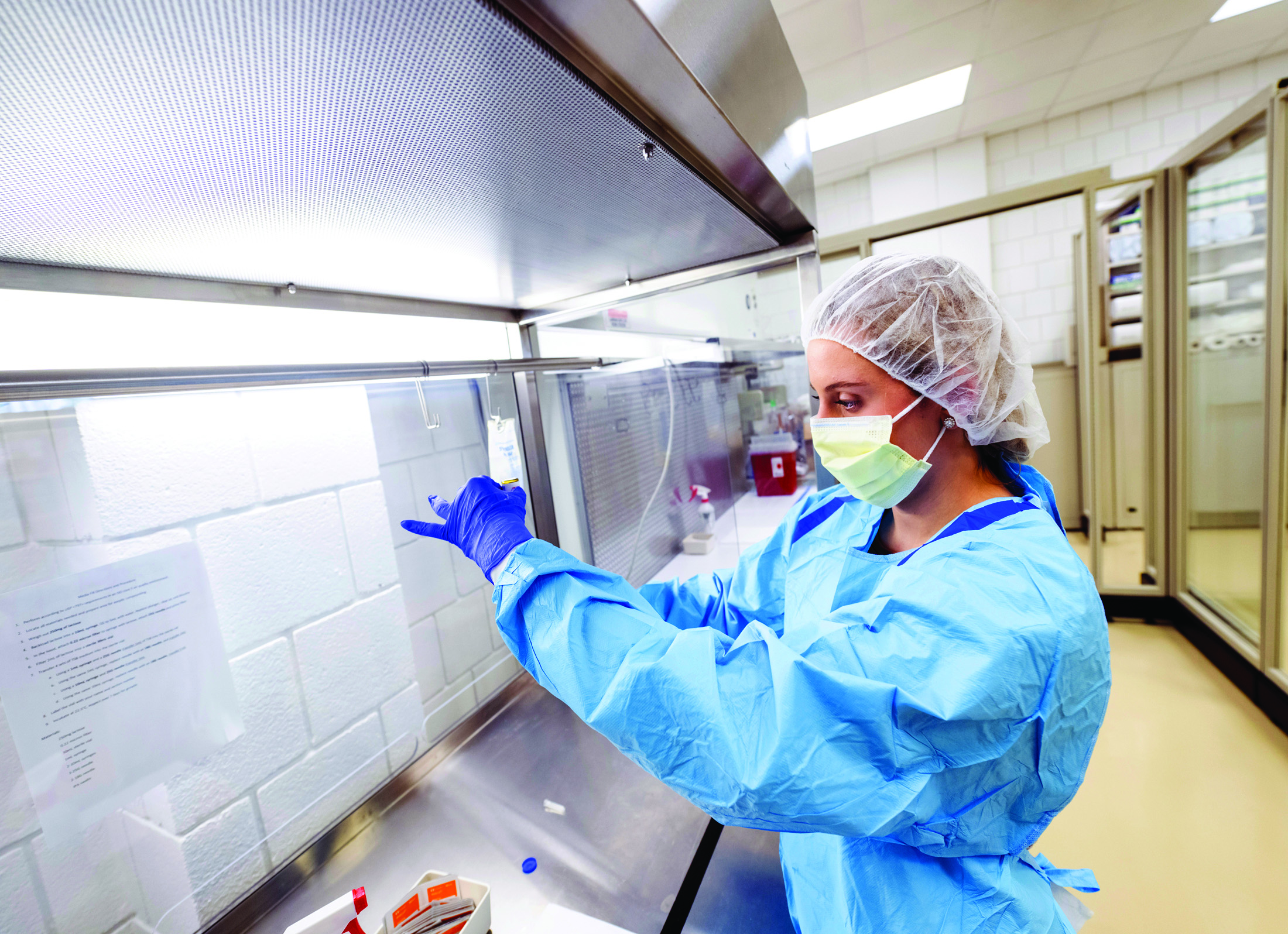
Put your interest in science to work in patient care. Build laboratory and analytical skills to perform diagnostic testing through science coursework and supervised clinical laboratory experience.
Medical Laboratory Science at Findlay
Why study Medical Laboratory Science at Findlay?
Put biology, chemistry, and mathematics to work in patient care. Findlay’s Medical Laboratory Science program prepares students to use diagnostic testing and scientific reasoning to help detect disease and inform treatment.
- Study the science behind diagnosis. Develop knowledge of human pathology and the technologies used in clinical laboratories.
- Practice careful problem-solving. Apply critical thinking and laboratory skills to questions that matter for patient care.
- Build a broad foundation. Graduates earn a Bachelor of Science degree and a minor in biology.
The program prepares students for medical laboratory science work, subject to applicable certification and employment requirements.
PROGRAM HIGHLIGHTS
Medical Laboratory Science by the Numbers
3+1
Coordinated pathway
Three years at Findlay plus a partner clinical year.
120+
Required credits
Listed for the Medical Laboratory Science program.
College of Health professions
At a Glance
College
College of Health Professions
Degree
Bachelor of Science in Medical Laboratory Science
Format
On-Campus
Credits
120+
Curriculum
Course Requirements
Students pursuing a Bachelor of Science in Medical Laboratory Science at the University of Findlay complete required coursework grounded in biology, genetics, chemistry, and anatomy to develop a strong foundation in laboratory science and diagnostic testing. Depending on academic preparation and career goals, additional science courses or specialized laboratory experiences may be required.
Students gain hands-on experience through clinical laboratory training and supervised practicum experiences that prepare them for professional practice in healthcare and diagnostic laboratory settings. The program equips graduates with the technical knowledge, analytical skills, and professional competencies needed for careers in medical laboratory science and related healthcare fields.
opportunities
Hands-On Experience
Hands-on experience is a vital component of success in the Medical Laboratory Science (MLS) program. Students are strongly encouraged to gain exposure to a clinical laboratory setting early in their academic journey, even prior to their final year.
Entry-level roles such as laboratory specimen processor, phlebotomist, or laboratory assistant provide valuable insight into daily laboratory operations as well as build confidence and familiarity with real-world workflows. Specimen processing is especially beneficial, offering experience with specimen handling, registration, and pre-analytical procedures, as well as exposure to Electronic Medical Record (EMR) systems.
For those not yet ready for employment, volunteer and job shadowing opportunities offer meaningful ways to engage with the field. These experiences enhance classroom learning and better prepare students for clinical training and future careers in the laboratory profession. Students interested in these opportunities are encouraged to reach out to their academic advisor for additional information and guidance on getting involved.
university
Affiliations
The University of Findlay Medical Laboratory Science program maintains affiliations with the following programs accredited by the National Accrediting Agency for Clinical Laboratory Sciences (NAACLS):
Cleveland Clinic School of Health Professions Medical Laboratory Science Program
Medical Laboratory Science Program: NAACLS Accredited
- 3 years at UF + 1 year at Cleveland Clinic — coordinated 3+1 program
- B.S. degree from University of Findlay upon completion
- Eligible for national board exam and MLS certification
Ohio Northern University West Central Ohio Medical Laboratory Science Program
West Central Ohio Medical Laboratory Science Program: NAACLS Accredited
- 3 years at UF + 1 year at ONU — coordinated 3+1 program
- B.S. degree from University of Findlay upon completion
- Eligible for national board exam and MLS certification
Mercy Integrated Medical Laboratory Science Program
Medical Laboratory Science Program: NAACLS Accredited
- 3 years at UF + 1 year at Mercy Health — coordinated 3+1 program
- B.S. degree from University of Findlay upon completion
- Eligible for national board exam and MLS certification
beyond graduation
Careers
Medical laboratory scientists analyze patient specimens to help clinicians diagnose and monitor disease. Roles may require certification or licensure depending on the employer and state.
- Clinical laboratory technologist
- Medical laboratory scientist
- Clinical microbiology technologist
- Blood bank technologist
Explore related occupations and typical entry requirements in the U.S. Bureau of Labor Statistics Occupational Outlook Handbook profile for clinical laboratory technologists and technicians.
financial aid
Cost of Education
Students can earn endowed scholarships in addition to their merit scholarships during their time at Findlay.
college of Health Professions
Accreditation
Most employers require medical laboratory scientists to obtain certification through an accrediting body, such as the American Society for Clinical Pathology (ASCP) Board of Certification (BOC). After passing the credentialing exam, medical laboratory scientists (MLS) can practice under the credentials of MLS(ASCP)CM.
Contact Us
Need more information about the Medical Laboratory Science program at the University of Findlay? Have questions about admissions, curriculum, clinical experiences, career opportunities, or student support? We’re here to help—connect with our team to learn how the Medical Laboratory Science program prepares students for essential roles in laboratory diagnostics and healthcare.
Email: susan.watters@findlay.edu
Phone: 419-434-5670
Location: 300 Davis St., Findlay, OH 45840
Email: kelli.recker@findlay.edu
Phone: 419-434-5621
Location: 300 Davis St., Findlay, OH 45840
GET STARTED
Explore Your Next Step
Ready to see whether Findlay fits your goals?