

Bachelor of Science · Minor available · Pre-Med emphasis
Biology
Study living systems through research, fieldwork, and laboratory experience. Build a foundation for careers in the life sciences or for graduate and professional study.
BIOLOGY AT FINDLAY
Why study biology at Findlay?
Explore how life works in the lab and in the field. Findlay biology students can build research skills alongside faculty, study biodiversity and antibiotic resistance, and prepare for work or advanced study in the life sciences.
- Learn by doing. Use 14 labs, Olive Street Nature Preserve, and the Rieck Center for Habitat Studies as places to investigate living systems.
- Get involved in research. Students are encouraged to join faculty research projects beginning in their first year.
- Choose your direction. Explore the Biology major, a Pre-Med emphasis, or a Biology minor.
Interested in medicine, veterinary care, conservation, biotechnology, or research? This program provides a foundation for several paths; some careers require further education or licensure.
College of sciences
At a Glance
College
College of Sciences
Degree
Bachelor of Science in Biology or Minor in Biology
Format
On-Campus, Online or Hybrid
Required credits
120+ Credits
beyond graduation
Careers
Biology can lead toward healthcare, laboratory research, environmental work, education, and graduate or professional study. Explore examples below; some roles require additional education, certification, or licensure.
- Medicine
- Physician
- Physician Assistant (PA)
- Veterinarian
- Optometrist
- Dentist
- Chiropractor
- Genetic Counselor
- Medical Technologist
- Government
- Public Health Administrator
- Environmental Policy Expert
- Wildlife Biologist
- Park Ranger
- Private Sector
- Environmental Consultant
- Pharmaceutical Researcher
- Research Technician
- Education
- Professor
- Academic Researcher
Whether you’re ready to start your career or continue into graduate or professional school, you’ll gain the knowledge and experience to take your next step with confidence.
For national context on related careers, explore the U.S. Bureau of Labor Statistics Occupational Outlook Handbook profile for Field of degree: Biology.
opportunities
Hands-On Experience
From your very first year, you’re encouraged to join faculty research projects and start building the hands-on skills that will set you apart in your career.
- Antibiotic resistance in freshwater systems
- Evolution, genetic diversity, and adaptation of viruses and other infectious pathogens
- Macroinvertebrate communities as an indicator of water quality
- Nutritional impacts on the human immune system
- Investigating the relationships between biomechanics and functional morphology
- Changes in arboreal communities over time in canopy, forest, and urban environments
- Using histology to uncover the ecological stories of amphibians and reptiles
- Molecular phylogeny of marine invertebrates
- Anti-cancer properties of fungal metabolites
- Small mammal population studies
Curriculum
Course Requirements
Students earning a Bachelor of Science in Biology must complete the following curriculum.
The curriculum consists of required courses with an option in Biology or Pre-Med Emphasis. View the full curriculum in the University of Findlay Undergraduate Catalog.
A few courses you may take
- Biology I: Introduction to Cell and Molecular Biology
- Biology II: Biodiversity, Form, and Function
- Genetics
- Research Methods
- Evolutionary Analysis
admissions
Admission Requirements
To apply to the University of Findlay, you’ll need a high school diploma from an accredited school (or a GED) with a college prep curriculum. A minimum 3.0 GPA is required. UF recommends taking 4 years of English, 3 years of math, 3 years of social studies, 2 years of science, and 2 years of a foreign language. ACT or SAT scores are optional.
International students must submit English proficiency test scores — such as a TOEFL (iBT) of at least 61 or an IELTS of at least 6.0 — unless their previous schooling was taught in English. Students who don’t meet the requirement may enroll in UF’s Intensive English Program.
TESTIMONIALS
The Oiler Experience
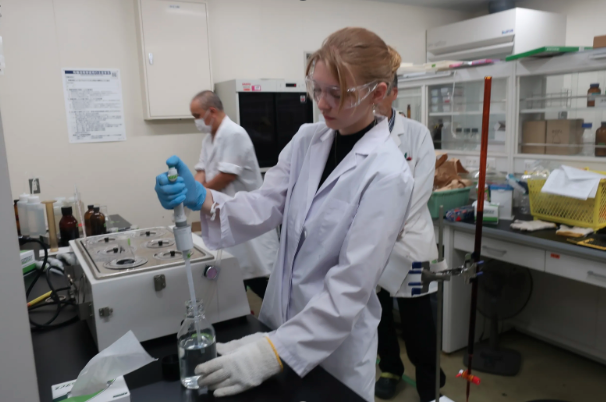
“The UF Biology Department has completely changed the course of my life. My experience at the University of Findlay has been very special and unique and I will be grateful for it forever.”
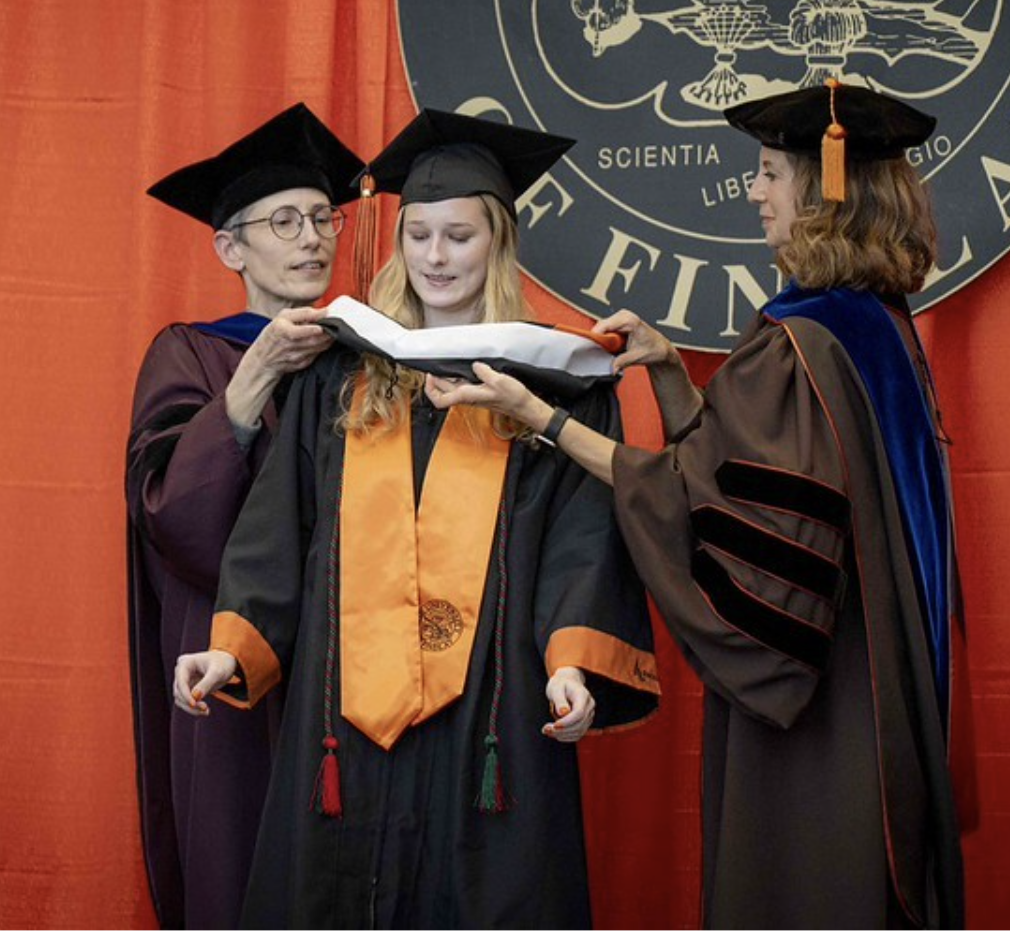
““I love the biology department, and I have had so many positive experiences with multiple faculty members. One of my favorite experiences was catching fish in the stream…with Professor Rheubert.”
student involvement
Clubs and Activities
There are many opportunities outside of the classroom to get involved, including:
- Tri-Beta Biology Honor Society
- Wilderness Club
- Pre-Med Club
- Herpetology Club
- Bird Club
- Plant Club
- The Hive
- Night Hikes, Open Houses at Nature Facilities, & Bio Blitzes
GET STARTED
Explore Your Next Step
Ready to see whether Findlay fits your goals?